
Your septic system does a lot of quiet, thankless work. Every flush, every load of laundry, every sink drain flows into that buried tank on your property. And for most homeowners in Florida, that system hums along without much thought. That is, until the septic tank needs maintenance, like a pump out or repair.
The signs of trouble aren’t always dramatic. Sometimes your tank is quietly approaching capacity while everything above ground looks perfectly fine. Other times, the warning signs are right in front of you, and you’re just not sure what they mean or whether they’re worth a call.
Either way, knowing when to schedule a septic tank pump out can save you from a much bigger, more expensive problem down the road.
Here’s how to tell when it’s time.
What a Septic Tank Pump Out Actually Does
Tank pumping is exactly what it sounds like: a licensed technician removes the accumulated waste from your tank so it can keep doing its job. That waste includes solids, sludge, and scum that build up over time and slowly take over the space your system needs to function.
Inside your tank, waste naturally separates into three layers:
- Sludge settles to the bottom as solid waste
- Effluent sits in the middle as the liquid layer that flows out to your drainfield
- Scum floats to the top as grease, soap, and other lightweight materials
When sludge and scum build up too thickly, they crowd out that middle liquid layer. Eventually, solid waste starts pushing out to the drainfield instead, and that is where repairs get expensive fast.
A routine pump out removes that buildup before it becomes a problem. It takes about an hour, and a good technician will check your tank’s condition, baffles, and access points while they’re at it.

How Often Should You Pump in Central Florida?
Most tanks need pumping every 3 to 5 years, but several local factors can shift that window significantly.
Florida’s wet season, which runs from roughly June through September, saturates soil and puts extra stress on drainfields across the region. Homes on Lakeland’s rural outskirts or near Winter Haven’s chain of lakes often sit on slower-draining soils that make regular maintenance even more critical.
And of course, bigger households simply fill tanks faster than smaller ones.
| Household Size | Tank Size (Gallons) | Recommended Frequency |
| 1 to 2 people | 1,000 | Every 5 years |
| 3 to 4 people | 1,000 | Every 3 to 4 years |
| 3 to 4 people | 1,500 | Every 4 to 5 years |
| 5 or more people | 1,000 to 1,500 | Every 1 to 3 years |
| 5 or more people | 2,000+ | Every 3 to 5 years |
Not sure when your tank was last serviced? If you’ve recently moved into a home in Brandon, Riverview, or Valrico and inherited the system, starting with a pump out and inspection together is the smartest move you can make.
7 Signs Your Septic Tank Is Due for a Pump Out
You don’t need to wait for a backup to take action. These are the signs that your tank is filling up or struggling to keep up.
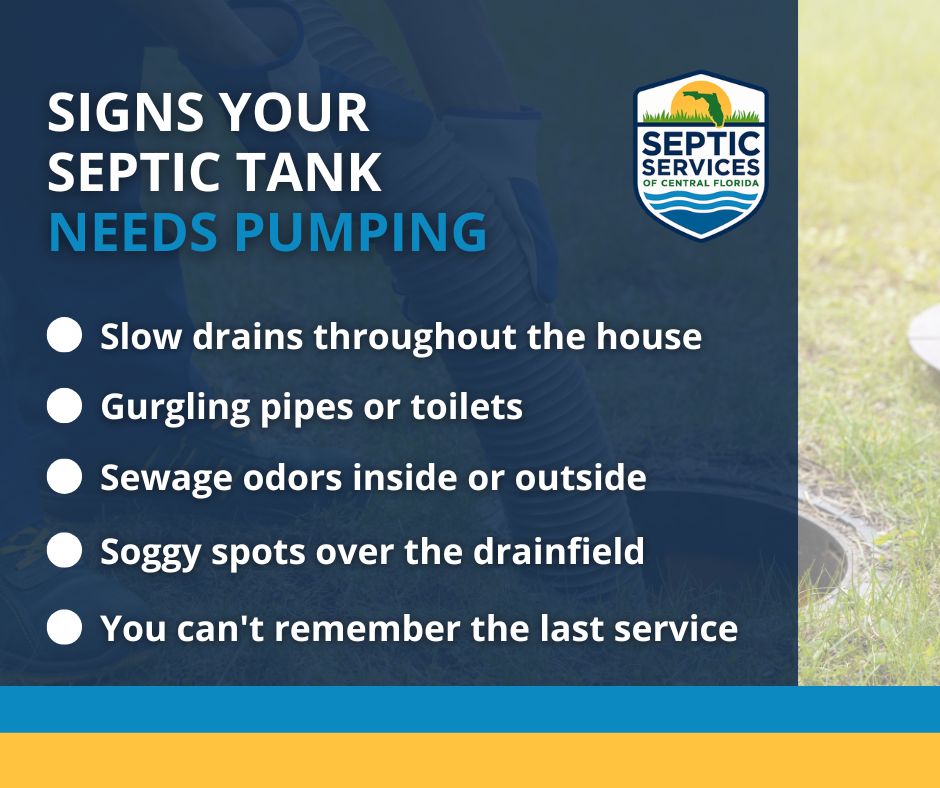
1. Multiple slow drains: One slow drain is usually a clog isolated to that line. Multiple slow drains throughout the house at the same time, including kitchen and bathroom sinks, showers, and toilets, point to a system-wide issue. A full or nearly full tank is one of the most common causes.
2. Gurgling pipes: Gurgling or bubbling sounds from your toilet or drains when running water elsewhere in the house signal pressure or a developing blockage in the line. This symptom often shows up before more obvious problems do.
3. Sewage odors inside or outside: Catching a smell near your indoor drains, or noticing that distinct odor outside around your tank or drainfield, means waste is not being contained the way it should be. That’s a clear sign to call for service.
4. Soggy spots over the drainfield: A wet patch in your yard that doesn’t dry out after rain, or that appears even when it hasn’t rained, is a red flag, especially if it’s sitting above your drainfield. It usually means the system is receiving more liquid than the soil can absorb.
5. Extra-lush grass over the tank: Unusually fast-growing, bright green grass above your septic system is not a good sign. It means nutrients from waste are feeding the soil from below. Something is leaching that shouldn’t be.
6. Sewage backup: Waste coming back up through your drains or toilets means your tank is at or past capacity. Stop running water in the home and call for emergency service immediately.
7. You don’t remember the last pump out: If you genuinely can’t recall when your tank was last serviced, it’s time to find out. Tanks throughout Polk County can reach dangerous sludge levels without producing a single visible symptom above ground.
What Happens If You Wait Too Long?
Skipping pump outs doesn’t just create a mess. It can cause serious, lasting damage to your drainfield. When sludge overflows into the drainfield, it clogs the soil and pipes designed to absorb and filter effluent.
Once that happens, the drainfield loses its ability to process waste, and the repairs that follow are not cheap. Depending on the extent of the damage, you could be looking at:
- Partial drainfield repairs
- Full drainfield replacement
- A completely new septic system
Staying current with pump outs is genuinely one of the least expensive ways to protect your system long term.
What to Expect During a Professional Pump Out
A technician will locate and expose your tank’s access lid. Some older tanks in the Bartow or Wauchula area may need a little digging if the lids haven’t been raised to the surface. From there, they’ll use a vacuum truck to remove all contents, including sludge, scum, and effluent. Most residential jobs take about an hour.
A thorough technician will also check your inlet and outlet baffles, inspect the tank walls for cracks or damage, and flag anything that needs follow-up before they leave. Most jobs are wrapped up in a single visit, and same-day service is available for urgent situations.
Pump Out vs. Inspection: What’s the Difference?
These two services come up together often, so it’s worth knowing what each one actually covers.
A pump-out is maintenance. It clears the accumulated waste from your tank so the system keeps functioning the way it should.
A septic inspection is an evaluation. It assesses the condition, capacity, and compliance of your entire system, including the tank, baffles, lids, and drainfield. Inspections are especially important when buying or selling a property, since a standard home inspection won’t examine septic health at the same level of detail.
Getting both done at the same time is a smart move, particularly if it’s been several years since either service was last performed.
Common Questions About Septic Pump Outs
Can I pump my own tank?
No. Septic waste is classified as a hazardous material and requires licensed vacuum equipment and disposal at an approved facility. Attempting tank pumping without proper licensing in Florida can lead to fines and environmental violations.
Does a pump-out fix slow drains or backups?
If the root cause is a full tank, yes. If there’s a line clog or drainfield damage involved, those need to be diagnosed and addressed separately. A good technician will tell you exactly what they found during the service visit.
Does Florida’s rainy season affect my pumping schedule?
It can. Saturated soil during the wet season puts extra stress on drainfields throughout Central Florida. Scheduling your pump out before June puts your system in the best shape heading into those peak stress months.
What if my tank has never been pumped?
Call and get it assessed. A tank that has been neglected for 10 or more years may have more buildup than a single pump-out can fully address. A technician can walk you through the best next steps based on what they find.
When to Call a Professional
Call right away if you’re noticing several warning signs at once, or if you’re buying or selling a home in Hillsborough or Polk County and the system hasn’t been recently inspected.
For emergencies like active sewage backup, strong odors inside the home, or standing waste in your yard, don’t wait it out. Same-day service is available, and acting quickly can make a real difference in how much damage occurs.
Conclusion
For most Central Florida homeowners, staying ahead means scheduling a pump out every 3 to 5 years and paying attention to the signs that suggest it’s time sooner.
Septic Services of Central Florida serves homeowners throughout Polk, Hardee, and Hillsborough Counties, including Lakeland, Bartow, Winter Haven, Brandon, Plant City, and the surrounding communities. Honest service, transparent pricing, and no hidden fees.


