
When a septic drain field starts to fail, it rarely happens all at once. The warning signs usually show up weeks or months before things get serious, which gives homeowners a window to act before a minor issue turns into a full system failure.
Knowing what to look for is the difference between a repair and a replacement.
This post covers how a drain field works, the most common signs of trouble, what causes problems in Central Florida, and what your options are when something goes wrong.
What Does a Septic Drain Field Do?
The drain field, also called a leach field, is the final “stage” within your septic system. After wastewater leaves your home and enters the septic tank, solids settle to the bottom and liquids flow out into the drain field, where they filter through the soil and disperse safely underground.
The drain field is made up of a network of perforated pipes buried in gravel-filled trenches. The soil does the real work, filtering out bacteria and nutrients before the water reaches the groundwater table below.
When the drain field is healthy, this process is invisible. When something goes wrong, the signs show up above ground and inside your home. The tricky part is that early symptoms are easy to dismiss as minor plumbing issues, which is why homeowners often wait longer than they should before calling for help.
Warning Signs Your Drain Field May Be Failing
The earlier you catch drain field problems, the more options you have. These are the most common signs Central Florida homeowners should watch for.
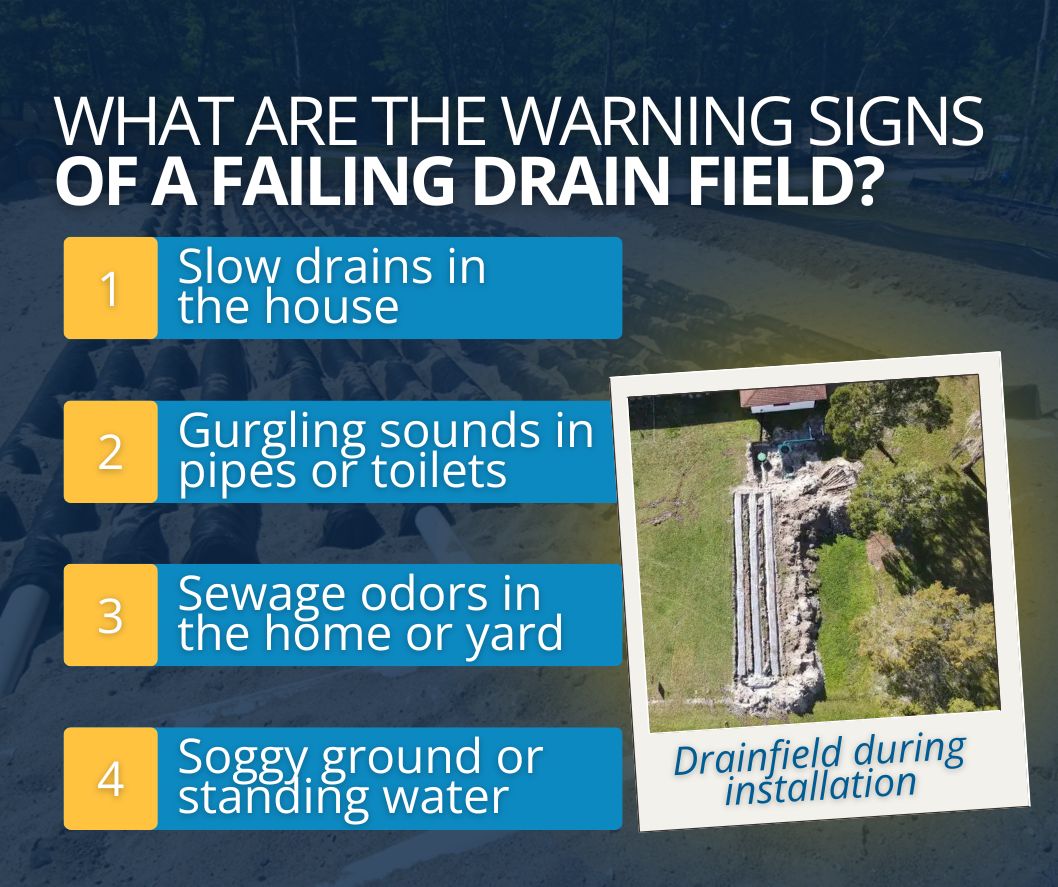
Slow Drains Throughout the House
One slow drain is usually a clog. When multiple drains are slow at the same time, including toilets, sinks, and showers, that points to a problem further down the line. A saturated or failing drain field is one of the most common causes. If basic drain cleaning does not solve it, the septic system is the next thing to check.
Gurgling Sounds in Pipes
If you hear gurgling after flushing or running water, the system may not be moving wastewater out fast enough. That pressure backup creates the sound you hear in the pipes. It tends to be most noticeable in toilets and floor drains, and it often appears alongside slow drains rather than on its own.
Sewage Odors Inside or Outside
A properly functioning septic system should not produce odors you can detect indoors or near the yard. Sewage smells near the drain field area or inside the home are a clear signal that something is wrong. Outdoor odors near the drain field often mean wastewater is surfacing rather than filtering through the soil as it should.
Standing Water or Soggy Patches
When a drain field becomes saturated, wastewater starts pooling at the surface rather than filtering down. You may notice unusually lush grass over the drain field area, wet or spongy ground, or visible pooling without recent rain.
In Central Florida, where the water table is already high in many areas, this can happen faster than homeowners expect. If you are not sure where your drain field is located, your county health department has permit records that show the system layout.
Sewage Backup in the Home
The most urgent warning sign. If wastewater is backing up into toilets, showers, or floor drains, the system has likely reached capacity and needs immediate attention.
Do not continue running water or flushing until the system has been evaluated. What seems like a plumbing backup is often a sign that the drain field can no longer accept flow from the tank.
What Causes Drain Field Problems?
Understanding the root cause matters because it determines what kind of repair will actually solve the problem.
| Cause | What Happens |
| Skipped pump-outs | Solids overflow into pipes and clog the gravel bed |
| Overloading the system | Excess water volume saturates the field faster than it can absorb |
| Root intrusion | Tree and shrub roots grow into pipes, causing blockages and damage |
| Age and wear | Bio-mat buildup and compaction reduce absorption over time |
| Soil conditions | Sandy or clay-heavy Central Florida soils can limit drainage capacity |
| Driving over the field | Compacted soil crushes pipes and restricts absorption |
Most drain fields have a lifespan of 20 to 30 years under normal use. Florida’s climate, high water table, and soil variability can shorten that lifespan if the system is not properly maintained.
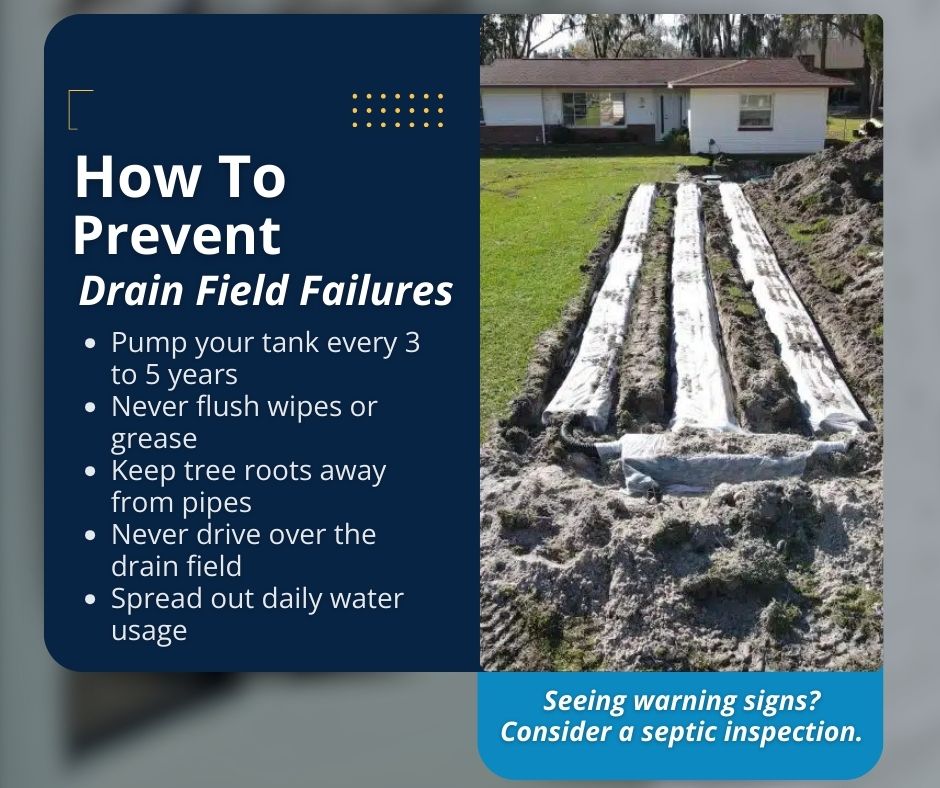
The single most preventable cause of early drain field failure is a septic tank that goes too long without being pumped. When the tank fills past capacity, solids that should stay in the tank make their way into the drain field pipes, and that damage accumulates quickly.
Root intrusion is another common issue in Central Florida, specifically. Mature trees and large shrubs naturally seek out moisture, and the drain field is a consistent source. Oaks, palms, and other species common to Central Florida yards can send roots into the pipe network over time, sometimes without any visible surface symptoms until significant damage has already been done.
Drain Field Repair vs. Replacement
Not every drain field problem requires a full replacement. The right solution depends on what caused the failure and how far it has progressed.
- Minor clogging or bio-mat buildup: Drain field treatment or jetting
- Isolated pipe damage: Spot repair or partial replacement
- Root intrusion with limited spread: Root removal and pipe repair
- Full saturation or widespread failure: Complete drainfield replacement
- Challenging site conditions: ATU or alternative system installation
A professional inspection is the only reliable way to determine which applies to your situation. Some homeowners assume they need a full replacement when a targeted repair would do. Others delay calling until a repairable problem becomes a much more expensive one.
When Is a Replacement Not the Right Answer?
For some Central Florida properties, a standard drain field replacement will not fully solve the problem. Properties with high water tables, limited lot size, or specific environmental requirements may be better suited for an Advanced Treatment Unit (ATU).
ATUs treat wastewater more thoroughly before it disperses, which allows them to operate in conditions where a conventional drain field would struggle. Rather than relying entirely on soil absorption, an ATU processes effluent through aeration and additional treatment stages before it enters the ground. This makes them suitable for lots where soil permeability is poor or where the water table sits too close to the surface for a standard system to function correctly.
ATUs require regular maintenance and inspections to stay in compliance with Florida Department of Health requirements, but for the right property, they are the more reliable long-term solution.
If a previous drain field replacement has failed, if the property has a history of drainage issues, or if site conditions were flagged during a previous evaluation, an ATU assessment is worth having before committing to another conventional install.
When to Call a Professional
- As soon as you notice symptoms: Drain field problems do not resolve on their own. Slow drains, odors, soggy ground, and gurgling pipes all get worse over time. Calling early keeps repair options open and costs lower.
- Before buying or selling a property: A real estate septic inspection assesses the condition of the tank and drain field before a transaction closes. Discovering a failing drain field after closing is an expensive surprise that an inspection would have caught.
- After a sewage backup: Any backup inside the home requires immediate professional evaluation. The drain field may be saturated, the tank may be full, or there may be a blockage in the line.
- If the tank has not been pumped in more than 5 years: An overdue tank puts direct stress on the drain field. A pump-out also gives a technician the opportunity to assess the system’s overall condition at the same time.
- If your drain field is more than 20 years old: Older systems benefit from periodic evaluation even without obvious symptoms. Catching wear before it becomes a failure is always less expensive than responding to an emergency.
Other Questions Homeowners Ask
How often should a septic tank be pumped in Florida?
Most residential septic tanks should be pumped every 3 to 5 years, depending on household size, water usage, and tank capacity. Staying on schedule is one of the most effective ways to extend drain field life and avoid costly repairs.
What is an ATU, and when is one required?
An Advanced Treatment Unit processes wastewater more thoroughly than a conventional system before it disperses. They are often required on properties where soil conditions, lot size, or water table depth make a standard drain field impractical or non-compliant with Florida Department of Health standards.
What happens during a real estate septic inspection?
A licensed technician assesses the condition of the tank, drain field, and all system components. The inspection identifies current problems and flags anything that may need attention, giving buyers and sellers a clear picture of system health before closing.
What does a new septic system installation involve?
Installing a new system involves a site evaluation, permitting, and construction of the tank and drain field to the Florida Department of Health requirements. The scope depends on property size, soil conditions, and the type of system being installed.
Can a septic system serve a commercial property?
Yes. Commercial septic systems are sized and designed differently from residential ones to handle higher wastewater volumes and usage patterns. Permitting and compliance requirements also differ from residential installations.
Final Thoughts
A failing drain field is not something to wait on. The symptoms are usually visible long before the system fully fails, and acting early almost always means lower costs and more options.
For homeowners in Lakeland, Bartow, Winter Haven, Plant City, Brandon, Riverview, Valrico, and surrounding areas across Polk, Hardee, and Hillsborough Counties, Septic Services of Central Florida handles everything from initial inspections and routine pumping to full drainfield replacements and ATU installations.
If you are seeing any of the warning signs above, a free estimate is a good place to start.


