Central Florida homeowners often face unique challenges when it comes to wastewater. Between our high water tables, sandy soil, and proximity to sensitive springs and lakes, a standard septic tank isn't always the best fit. If you are building a new home or need to replace an aging system, you may have heard about ATU septic systems.
These "Advanced Treatment Units" are becoming a preferred choice for residents in areas like Lake County and East Pasco who want cleaner water and more reliable performance.
What Is an ATU Septic System?
An ATU septic system is a wastewater treatment setup that acts like a miniature municipal sewage plant for your home. While a traditional system relies on gravity and soil to filter out waste, an ATU uses oxygen to speed up the breakdown of organic matter.
By forcing air into the tank, the system encourages "aerobic" bacteria to grow. These bacteria are much more aggressive and efficient than the bacteria found in standard tanks, resulting in effluent that is significantly cleaner before it ever touches your drain field.
In Central Florida, ATU septic systems are often required on smaller lots or near bodies of water. Because the water leaving the tank is already highly treated, it places less of a burden on the soil. This can be a lifesaver for homeowners dealing with poor drainage or strict environmental regulations in protected areas.
How Aerobic Treatment Differs from Traditional Septic
Traditional septic systems are anaerobic, meaning they work without oxygen. Waste settles in a tank, and the liquid flows out to a drain field where the soil does the heavy lifting. In contrast, an ATU septic system adds an aeration chamber. A pump or compressor blows air into the wastewater, creating a bubbly environment where aerobic microbes thrive.
These microbes eat through solids much faster than anaerobic ones. This process removes more nitrogen and pathogens from the water. For a Florida homeowner, this means your backyard stays healthier, and your system is less likely to cause groundwater contamination. It is a more active, mechanical approach to waste management that provides a higher level of protection for our local environment.
The Benefits of Using an ATU in Central Florida
Living in the Sunshine State means dealing with a lot of water: both from the sky and under the ground. ATU septic systems offer several distinct advantages for our specific climate and geography:
- Better for Small Lots: If your property in a place like Clermont or Mt. Dora is too small for a massive drain field, an ATU can often allow for a smaller footprint.
- Protection for Springs: Central Florida is famous for its natural springs. ATUs reduce nitrogen levels, which helps prevent algae blooms in our local waterways.
- Durability in Poor Soil: If your land has a high water table or clay-heavy soil that doesn't "perc" well, the pre-treated water from an ATU is less likely to clog your system.
- Longer Drain Field Life: Since the water is cleaner when it leaves the tank, your drain field doesn't have to work as hard, which can extend its lifespan significantly.
Maintenance Requirements for ATU Septic Systems
Because an ATU is a mechanical system, it requires more "hands-on" care than a "set it and forget it" standard tank. These systems have moving parts, including air compressors, pumps, and timers. In Florida, state law often requires homeowners with an ATU to maintain an active service contract with a licensed provider.
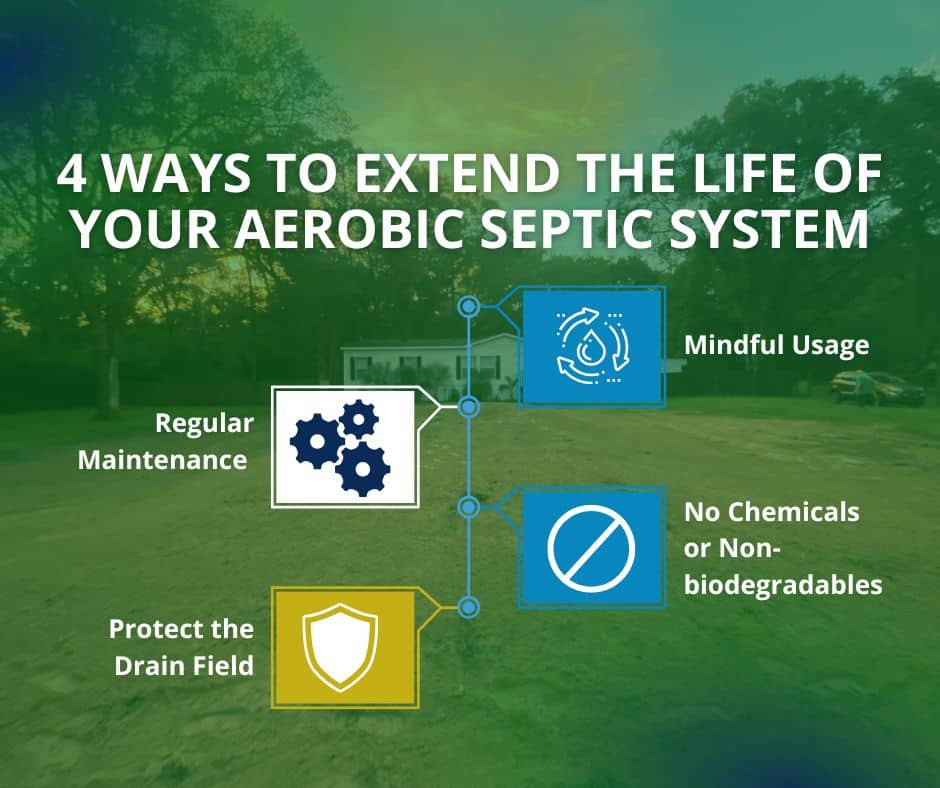
You should expect a professional to inspect your system at least twice a year. During these visits, the technician checks the aerator, clears any filters, and ensures the bacterial colony is healthy. While this adds a small recurring cost, it prevents major mechanical failures that could lead to messy backups. Regular maintenance ensures that the "advanced" part of your system actually keeps working.
| Feature | Standard Septic | ATU Septic System |
| Treatment Method | Passive (No Oxygen) | Active (Aeration) |
| Effluent Quality | Moderate | Very High |
| Space Required | Large Drain Field | Smaller Footprint |
| Maintenance | Every 3-5 Years | Bi-Annual Inspections |
| Power Needed | None | Electricity for Aerator |
Is an ATU Right for Your Property?
Choosing between a standard tank and an ATU usually comes down to your specific lot and local building codes.
Sometimes, an ATU might be your only legal option. Even if it isn't required, many homeowners choose it for the peace of mind that comes with a cleaner, more modern system.
If your current drain field is failing, upgrading to an ATU can sometimes save you from having to move your entire system to a different part of the yard. It is a smart investment for those who plan to stay in their homes long-term and want to minimize their environmental footprint.
Under Florida’s Clean Waterways Act and recent legislation like House Bill 1379, many homeowners no longer have a choice.
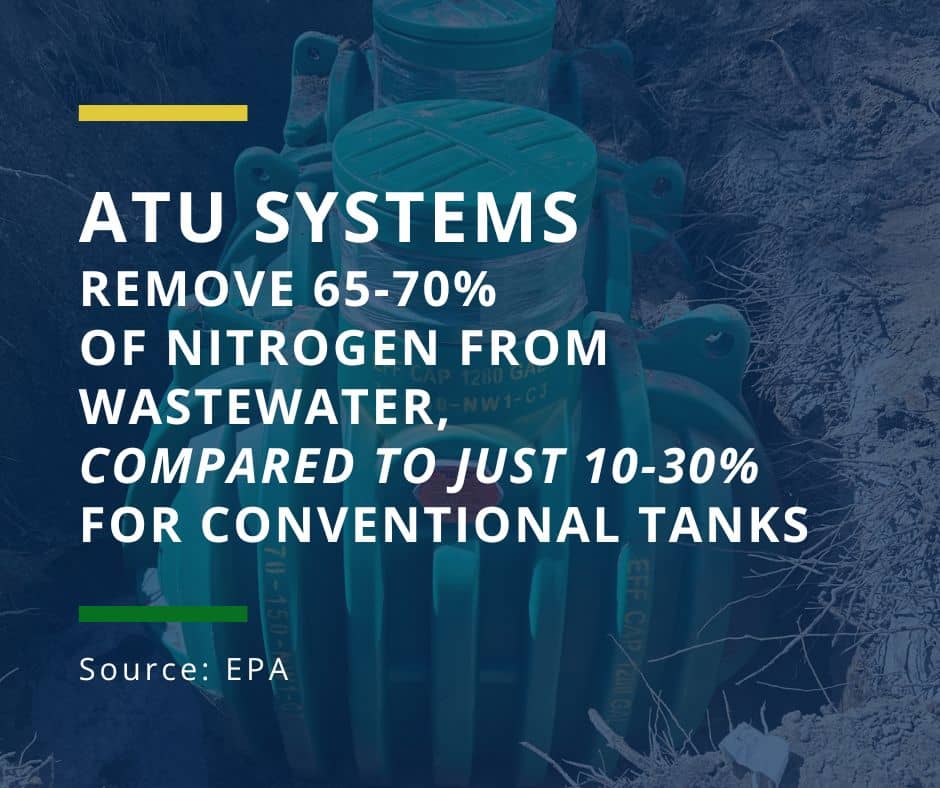
Even for existing homes, if your old system fails and you are in a Priority Focus Area (PFA), you may be required to upgrade to an ATU during the repair process. These laws are in place because standard septic tanks only remove about 30% of nitrogen; ATUs can remove 65% to 70% or more, preventing that nitrogen from fueling toxic algae blooms in our springs.
If your current drain field is failing, upgrading to an ATU can sometimes save you from having to move your entire system to a different part of the yard. It is a smart investment for those who plan to stay in their homes long-term and want to minimize their environmental footprint.
When an ATU is the Practical Choice
Beyond legal requirements, an ATU is often the best "engineering" solution for difficult Central Florida properties:
- High Water Tables: In low-lying areas of Polk or Lake County, the groundwater is often just a few feet below the surface. A traditional system requires several feet of dry soil to treat waste safely. Because an ATU treats the water inside the tank, it can often be installed in areas where a standard system would fail or require an unsightly, expensive "mound" system.
- Small or Waterfront Lots: If you have a tight lot in a community like The Villages or a waterfront property on the Harris Chain of Lakes, space is at a premium. ATUs produce such clean effluent that the state often allows for a drain field reduction of up to 50%, giving you more room for a pool, patio, or landscaping.
- Poor Soil Conditions: If your soil is heavy clay that won't "perc" (drain) or such coarse sand that water moves through it too fast to be cleaned, an ATU provides the treatment that the soil cannot.
Other Recommended Questions
Does an ATU septic system smell?
When working correctly, an ATU should have no odor. In fact, because the aeration process is so efficient at breaking down waste, they often have less scent than a traditional system. If you notice a "rotten egg" smell, it usually means the aerator has stopped working and needs a professional look.
What happens to an ATU during a power outage?
Since the aerator runs on electricity, it will stop working if the power goes out. Most systems have a reserve capacity that allows for limited water use during a short outage. However, if the power is out for more than a day, you should minimize water use to prevent the tank from overflowing.
Can I use a garbage disposal with an ATU?
It is best to avoid them. Even though ATUs are powerful, heavy food solids can overwhelm the bacteria and settle at the bottom, requiring more frequent pumping. It’s better to compost food scraps or toss them in the trash.
When to Call a Professional
Contact a septic professional if you notice:
- An alarm sounding or a red light on your control panel
- Sewage odors inside or outside your home
- Slow drains or gurgling sounds in your plumbing
- Lush, green grass over only one part of the drain field
- Standing water or soggy soil near the system
- Sewage that backs up into the house
ATU systems also require routine professional attention beyond emergency calls. Florida law requires bi-annual inspections for most ATU systems, and staying current on maintenance prevents small issues from becoming costly failures.
If you're building a new home, replacing a failing system, or unsure whether your property requires an ATU, a professional site evaluation can clarify your options and ensure compliance with local regulations.
Conclusion
An ATU septic system is a powerful tool for Central Florida homeowners who want a cleaner, more efficient way to manage wastewater. While they require a bit more maintenance and electricity, the benefits of a smaller footprint and better environmental protection are hard to beat.
If you are unsure if your property is a candidate for an ATU, the best first step is a professional site evaluation.


