If your home runs on a septic system, everything that goes down your drains, toilets, and washing machine is managed right on your property. There is no municipal sewer connection, no city treatment plant. Just a system buried in your yard doing quiet, important work every single day.
When that system is healthy and maintained, most homeowners in Lakeland, Bartow, Winter Haven, and the surrounding communities never think about it. When something goes wrong, it is very hard to ignore. Understanding how a septic system works is the foundation for knowing when to call for service, what to avoid, and why routine care protects one of the most important systems in your home.
The Basic Idea Behind a Septic System
A septic system collects, separates, treats, and disperses wastewater from your home using two main components: a septic tank and a drain field. It relies on gravity, natural bacteria, and soil filtration to treat waste safely before it returns to the groundwater below.
Most homeowners in Polk, Hillsborough, and Hardee Counties go about their daily lives without thinking about their septic system at all. That is exactly how it should work, as long as the system is being properly maintained.
The Main Parts of a Septic System
Here are the key components and what each one does.
| Component | Description |
|---|---|
| Septic Tank | A buried, watertight container made of concrete or fiberglass that holds 900 to 1,500 gallons of wastewater. It separates waste in two compartments before sending it onward. |
| Inlet and Outlet Baffles | Devices located at the tank’s inlet and outlet prevent scum and sludge from escaping. The T-shaped outlet baffle directs clarified liquid to the drain field while retaining solids. |
| Septic Drain Field | Also called a leach field, it uses a distribution box to spread effluent evenly through perforated pipes in gravel-filled trenches. Soil bacteria digest contaminants as wastewater percolates down. |
| Soil | Acts as a natural filter by trapping particles, neutralizing pathogens like coliform bacteria, and removing nutrients such as nitrogen and phosphorus before treated water returns to the groundwater. |
Step by Step: How a Septic System Works
- Wastewater leaves the home. Every flush, every load of laundry, every time you run the sink, that liquid wastewater flows through your home's plumbing and out through the main drainage pipe into the septic tank. The system is gravity-fed, so everything slopes naturally in that direction.
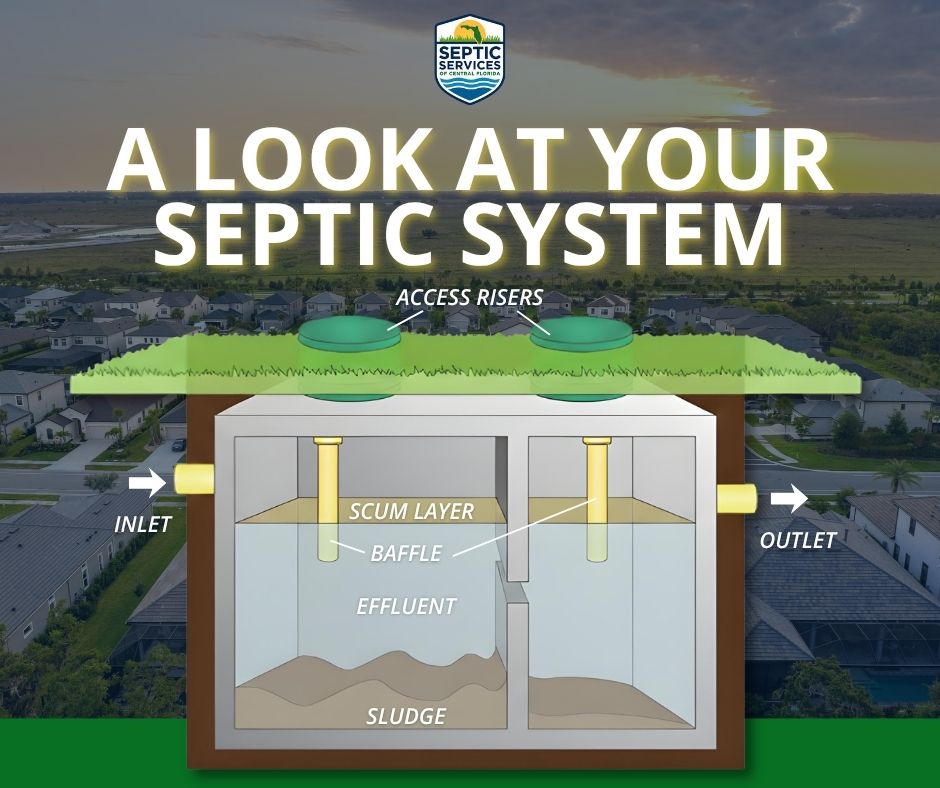
- Separation happens inside the tank. All household wastewater flows into the watertight septic tank, where it sits for about 24 to 48 hours. During that time, it separates into three distinct layers:
- Scum sits at the top and consists of fats, oils, and grease that float to the surface
- Effluent is the clarified liquid in the middle that moves forward in the treatment process
- Sludge is the layer of settled solids and organic matter that sinks to the bottom
- Anaerobic bacteria inside the tank work to break down solid materials in the sludge layer, reducing their volume over time. This is why the tank does not fill up immediately, but it does fill up eventually, which is why regular pumping matters.
- Effluent flows to the drain field. The clarified liquid in the middle layer exits through the outlet baffle and flows toward the drainfield area. A distribution box ensures the effluent is spread evenly through perforated pipes buried in gravel-filled trenches just below the ground surface.
- The soil finishes the treatment. As liquid effluent moves through the perforated pipes and into the surrounding gravel and soil, soil bacteria digest remaining contaminants. The vast majority of treated water percolates deep into the earth to recharge local aquifers and the groundwater cycle. A portion is also absorbed by plants over the drainfield and released into the atmosphere as vapor.
Why Florida Creates Unique Demands on Septic Systems
A conventional septic system works well when conditions are right. In Florida, the conditions are not always cooperative.
High Water Tables
In many parts of Polk and Hillsborough Counties, the water table sits close to the surface, especially during the rainy season. When the water table rises, it can saturate the drainfield area and prevent wastewater from percolating properly through the soil.
Sandy and Variable Soils
Some areas have highly porous sandy soil that moves effluent too quickly for adequate treatment. Others have clay-heavy soil that restricts drainage. Both affect how a drain field is designed and how it performs.
Year-Round Use
Florida homes run their septic systems continuously. There is no cold-weather slowdown. Household size, water usage habits, and what goes down the drains all affect how hard the system works and how quickly the tank fills.
These factors are part of why some properties in Central Florida require advanced septic systems rather than a conventional septic system. Advanced systems utilize additional treatment units to lower concentrations of organic matter, suspended solids, and pathogens before effluent reaches the drain field or is discharged, providing a higher level of treatment where standard systems cannot keep up.
Why Regular Maintenance Matters
The sludge layer at the bottom of your septic tank does not go away on its own. Anaerobic bacteria break down a portion of the solid materials, but not all of it. Over time, sludge accumulates from the bottom, and scum builds from the top, leaving less room for effluent in the middle.
When the tank gets too full, solid materials begin passing through the outlet baffle with the effluent. Those solids clog the perforated pipes in the drain field and fill the soil pores that allow drainage. This is how drainfield failure begins, and it is one of the most expensive repairs a homeowner can face.
Septic tanks should be pumped regularly to prevent the accumulation of sludge, which can lead to system failure and environmental contamination. For most residential tanks in Central Florida, that means pumping every three to five years, though household size, tank capacity, and usage habits all affect that timeline.
Improperly maintained septic systems can also lead to groundwater pollution and surface water contamination, which is a real concern in a state that depends heavily on its aquifers for drinking water.
What Not to Put Into Your Septic System
The bacteria inside your tank are doing important work. Anything that disrupts or kills them, or that does not break down naturally, creates problems. Keep these out of your system:
- Wipes of any kind, including products labeled flushable
- Feminine hygiene products and paper towels
- Grease, oils, and fats in significant amounts
- Harsh chemical cleaners, bleach in large quantities, and antibacterial products
- Medications and solvents
- Coffee grounds and food scraps
Even habits like running multiple large loads of laundry back to back can temporarily overload the tank with more liquid than it can properly separate. Spreading water use throughout the day makes a real difference.
Warning Signs Your System Needs Attention
Because the tank and drain field are underground, problems are not always obvious until they become serious.
Watch for these signs:
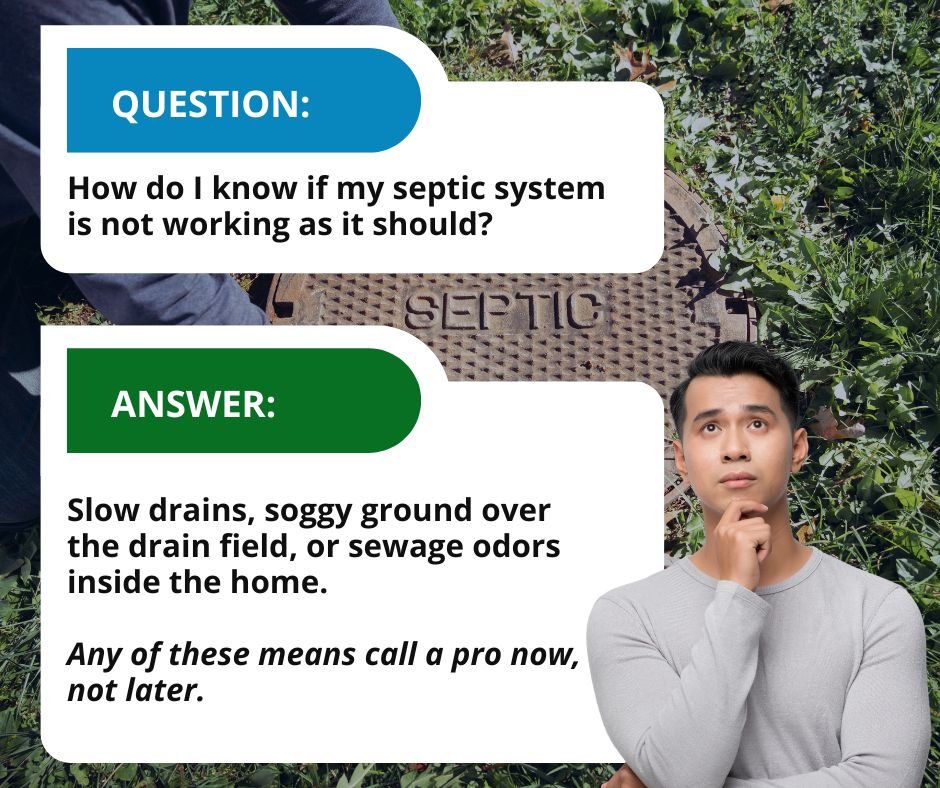
- Slow drains throughout the home, not just one fixture
- Gurgling sounds from toilets or drains
- Standing water or soggy ground over the drainfield area
- Unusually green or lush grass directly above the drain field
- Sewage odors inside the home or near the drainfield area
- Toilets that are slow to flush or back up
Any of these warrants a call to a licensed septic professional. Catching a developing issue early is significantly less expensive than dealing with a failed drain field.
Questions Florida Homeowners Ask About Septic Systems
- How often should a septic tank be pumped? To prevent solids from reaching the drain field, a residential septic tank should be professionally pumped every three to five years with Septic Services of Central Florida. Regular pumping is the most effective way to extend the lifespan of your system and avoid the high costs of premature failure caused by sludge buildup.
- What are the early signs that my septic system needs repair? Common warning signs include gurgling pipes, slow-draining toilets, or patches of unusually lush, "spongy" grass over the drain field. If you notice persistent sewage odors or standing water in your yard, it is important to schedule a diagnostic septic repair visit immediately to prevent wastewater from backing up into your home.
- Do I need a septic inspection when buying or selling a home? Yes. A real estate septic inspection documents the condition of the tank, how the system is functioning, and whether the drain field appears to be performing. Some lenders require one, and it protects both buyers and sellers from surprises after closing.
- How long does a septic system last? A well-maintained system can last 20 to 40 years or more. The drain field is usually the first component to show wear. Regular pumping and responsible use extend the life of the entire system significantly.
When to Call a Professional
Septic systems are not a DIY situation. Florida requires licensed contractors for installation, repair, and inspection for good reason.
Working on or around septic components without the proper training and equipment creates health risks and compliance issues.
Call a licensed septic professional when your tank is due for pumping, when you notice any of the warning signs listed above, when you are buying or selling a property with a septic system, or when you are planning any construction or landscaping near the drainfield area.
Septic Services of Central Florida serves Lakeland, Bartow, Winter Haven, Plant City, Brandon, Riverview, Valrico, Lithia, Seffner, Davenport, Haines City, Mulberry, Fort Meade, Wauchula, and surrounding communities throughout Central Florida.
Conclusion
A septic system does its job quietly and consistently when it is properly maintained and treated with care. Understanding how yours works is the first step toward making sure it keeps doing exactly that.
If you have questions about your system or are overdue for a pump-out, contact Septic Services of Central Florida for a free estimate. We are locally owned, fully licensed and insured, and committed to honest service with no hidden fees.


