Commercial septic pumping involves larger tanks, more frequent service, compliance documentation, and specialty components like grease traps that residential systems simply do not have. If your business in Central Florida operates on a private septic system, the requirements are meaningfully different from what a homeowner deals with. Septic Services of Central Florida serves restaurants, office buildings, and industrial facilities across Polk, Hardee, and Hillsborough Counties. Here is what business owners need to know.
The Core Difference
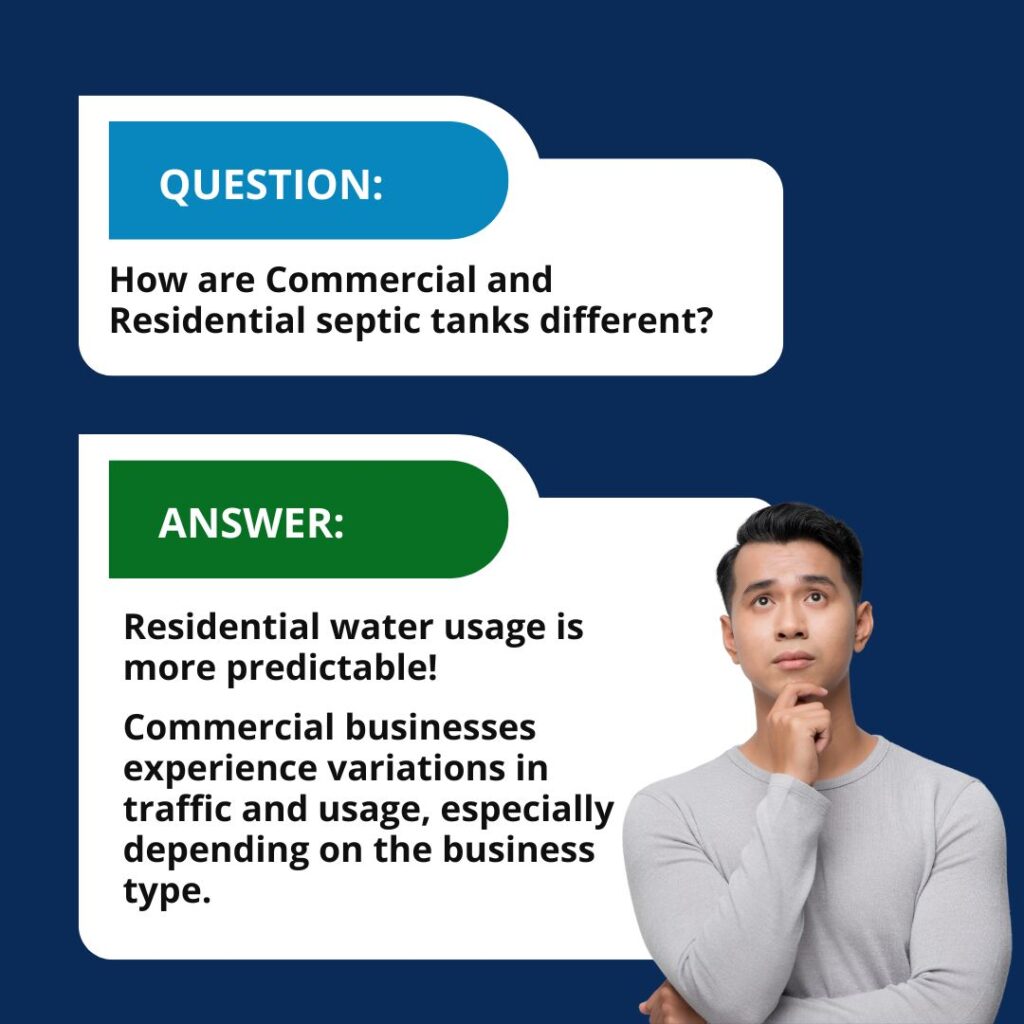
Residential septic systems are built around predictable household usage, typically 50 to 100 gallons per person per day. Commercial systems handle far higher and more variable loads depending on the business type, employee count, and customer traffic.
A 30-seat restaurant during a dinner rush can generate thousands of gallons of wastewater in a single shift. That kind of sustained demand drives every other difference between commercial and residential pumping.
Key Differences Between Commercial and Residential Septic Pumping
Tank Size and Configuration
Residential tanks in Florida typically hold 900 to 1,500 gallons. Commercial tanks often start at 1,500 gallons and scale well beyond that, with some facilities running multiple tanks in series or systems exceeding 5,000 gallons. These configurations require specialized equipment. A contractor who works only with residential accounts is not equipped to service them correctly.
Pumping Frequency
Residential tanks need pumping every three to five years. Commercial systems require much more frequent service. Restaurants and food-service businesses typically need full tank pumping every one to two years and grease trap cleaning every one to three months. Tank size, total wastewater volume, and solids content all drive pumping frequency, and commercial properties run higher on all three.
Compliance and Documentation
Many commercial properties in Florida must maintain written service records for health department inspections and business license renewals. Restaurants, daycares, medical offices, and food processing operations face the strictest requirements. A licensed commercial contractor provides documentation of every visit: volume pumped, component condition, and any corrective actions taken. Residential homeowners rarely need this paperwork. Commercial operators who cannot produce it may face citations.
Grease Traps and Specialty Components
Restaurants and commercial kitchens typically have a grease trap between the kitchen drains and the main tank. It captures fats, oils, and grease that would otherwise cause blockages and drain field damage. Grease traps need separate, more frequent cleaning than the main tank. Neglecting one is among the most common causes of septic failure in food-service businesses.
Our commercial septic services include grease trap cleaning and lift station maintenance alongside tank pumping, so business owners work with one licensed contractor for all of it.
Scheduling Around Business Operations
Commercial pumping has to fit around your hours. A restaurant cannot have a service truck in the lot on a Saturday afternoon. Office buildings need scheduling before or after the workday. At Septic Services of Central Florida, we build our schedule around your operations and have all documentation ready when we finish.
What Types of Commercial Properties Need Septic Pumping?
Any commercial property not connected to a municipal sewer relies on a private septic system that needs regular pumping. Common examples in Central Florida include:
- Restaurants, food trucks with fixed locations, and catering kitchens
- Office buildings in suburban or rural settings
- Agricultural operations, produce packing houses, and processing facilities
- Retail shops, self-storage facilities, and small commercial buildings
- Schools, churches, event venues, and bed-and-breakfast properties
If you are not certain whether your property is on city sewer or a private system, a licensed contractor can confirm quickly.
How to Set the Right Pumping Schedule for Your Business
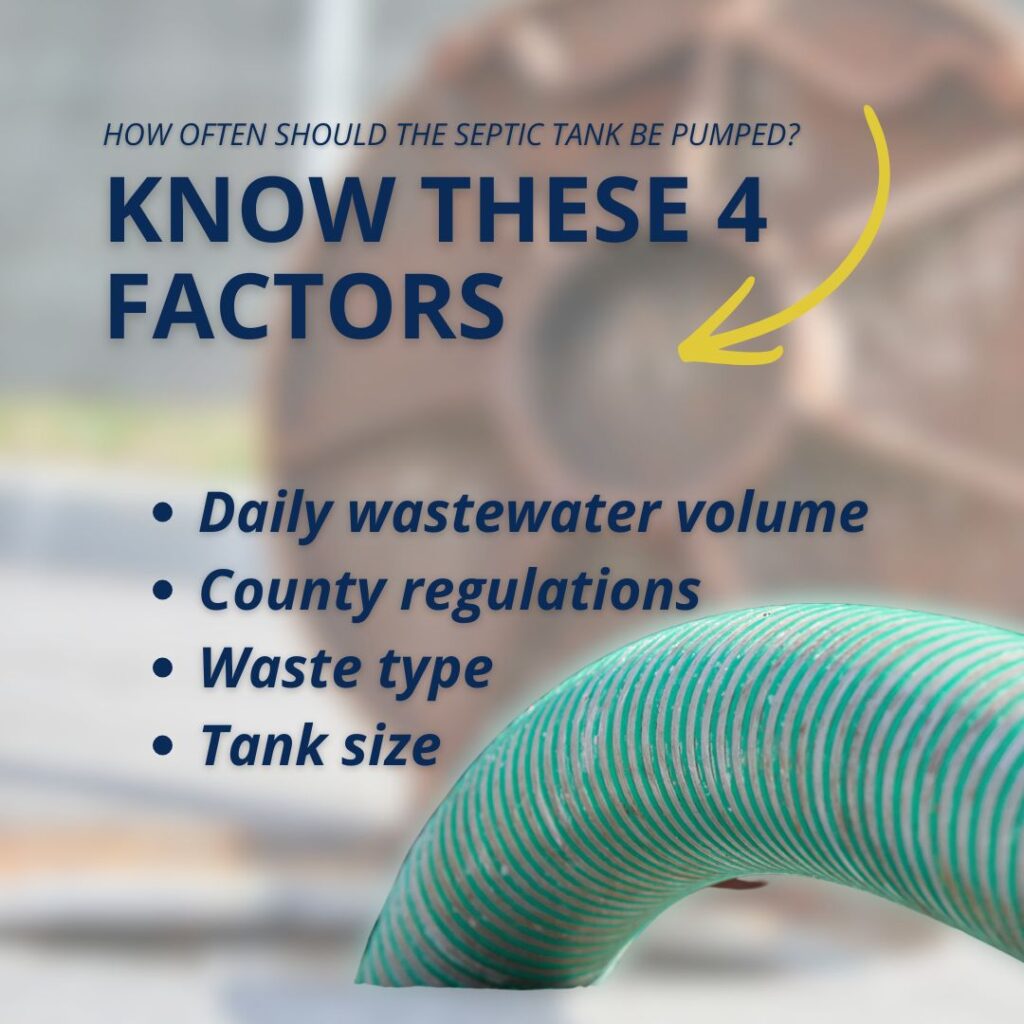
Four factors determine the right interval.
- Daily wastewater volume. Count employees, customers, and peak-period usage. Higher volume means more frequent pumping.
- Tank size. Smaller tanks fill faster. If your property inherited an older, undersized system, the timeline can compress significantly.
- Waste type. Restaurants, medical offices, and industrial facilities produce waste streams that are harder on a system than a standard office building. Grease, chemicals, and high-solids waste all accelerate fill rates.
- County regulations. Check with your county health department or ask your contractor. In some Florida counties, properties near water bodies or in specific zoning categories have mandated service intervals. Our team confirms requirements for your business category and puts together a documented schedule around them.
Related Questions to Explore
- How often should a commercial septic tank be pumped? Most commercial tanks need pumping every one to two years. Restaurants often need service annually, plus grease trap cleaning every one to three months. Our commercial septic services team builds a schedule around your usage and documents every visit for compliance.
- What is included in commercial septic pumping? A service visit covers full tank evacuation, accessible component inspection, and written documentation. Depending on the property, it may also include grease trap cleaning and lift station checks. Our commercial septic services bundle those into a single visit whenever possible.
- Does a restaurant need a grease trap AND a septic tank? Yes. The grease trap catches fats, oils, and grease before they reach the main tank, where buildup would destroy the drain field within months. Both need service on separate schedules. We handle both through our commercial septic services so nothing gets missed.
- What happens if a commercial septic system fails? A failure can trigger a health department shutdown order and force temporary business closure. The most common causes are infrequent pumping and neglected grease traps. If your system is showing warning signs, contact us for an assessment before it becomes an emergency. We offer septic tank pumping service for commercial properties throughout Central Florida.
- Is commercial septic pumping required by law in Florida? There is no single statewide mandate, but county health departments set minimum service intervals for commercial properties, especially food service and medical facilities. Inspectors can request service records, and missing documentation can result in citations. Our team ensures your records stay current after every visit.
When to Call a Professional
The right time to call is before there is a visible problem. Slow drains, odors near the tank, or standing water above the drain field are late-stage signs. By that point, the system is already under serious stress and repairs cost significantly more than routine maintenance.
Commercial septic work requires a licensed contractor. Unlicensed service does not produce documentation that satisfies health department requirements, and it exposes the property owner to liability. Septic Services of Central Florida serves commercial accounts across Polk, Hardee, and Hillsborough Counties with licensed technicians, proper documentation, and scheduling designed around your business hours. Contact us for a free estimate or to set up a recurring maintenance agreement.
Conclusion
Commercial septic pumping is more demanding than residential service in every dimension: larger tanks, more frequent pumping, required compliance documentation, and specialty components like grease traps.
- Restaurants typically need full tank pumping annually plus grease trap cleaning every one to three months
- Florida county health departments can require service records and cite businesses that cannot produce them
- A licensed contractor handles documentation, scheduling, and all components in a single relationship
If your business operates on a private septic system in Central Florida, the Septic Services of Central Florida team is available to build the right maintenance schedule and keep your compliance records in order.


