Septic systems in Florida operate under stricter rules than most homeowners expect. The state's high water table, sandy soils, and dense concentration of onsite sewage systems create conditions that require specific design, permitting, and maintenance standards.
Whether you are buying a property, planning new construction, or just trying to understand what you already have, this guide covers what matters most.
How Common Are Septic Systems in Florida?
An estimated 2.6 million Floridians rely on onsite sewage treatment rather than a public sewer connection. In Central Florida, many properties across Polk, Hardee, and Hillsborough counties run on septic because municipal sewer does not extend to those areas. This is routine infrastructure for a large share of the state's homeowners, not an edge case.
How Florida Septic Systems Work
Wastewater flows from your home into the septic tank, where solids settle, and liquids move on to the drainfield for final treatment in the soil. For a full breakdown, see our guide on how a septic system works in Florida.
The Tank
The tank is a buried, watertight container made of concrete or polyethylene. It holds wastewater long enough for solids to settle and organic matter to partially break down. Florida sizes tanks based on the number of bedrooms, since that determines the estimated daily wastewater flow.
The Drainfield
Liquid from the tank flows into the drainfield, where perforated pipes distribute it through gravel beneath the soil surface. Bacteria in the soil complete the treatment. The drainfield is typically the most expensive component to replace if it fails.
What Makes Florida’s Conditions Different?
Florida's environment creates challenges other states rarely face.
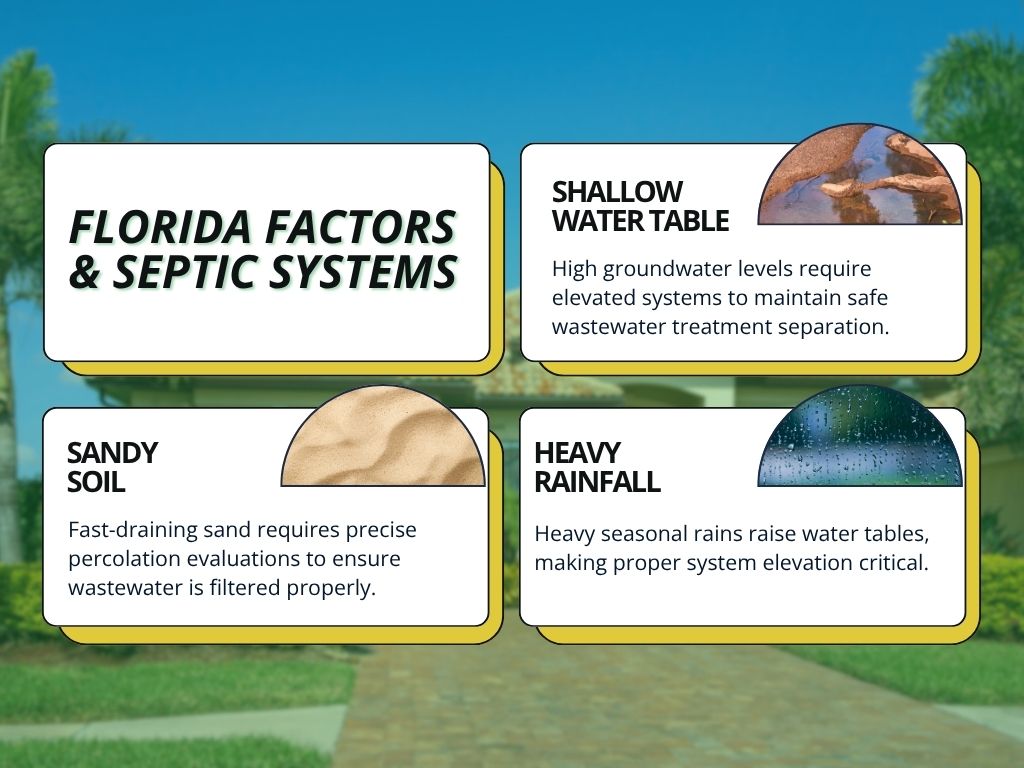
- Shallow water table: In many parts of the state, the water table sits just a few feet below the surface. Drainfields need adequate vertical separation from groundwater to treat effluent properly. Where that separation is not achievable, conventional drainfields are not permitted, which is why mound systems and Advanced Treatment Units are common in Florida.
- Sandy soil: Florida's sandy, low-clay soil drains quickly. That can mean wastewater moves through the ground faster than it can be fully treated. Soil percolation rates must be evaluated before any new system is permitted.
- Heavy rainfall: Florida averages over 50 inches of rain annually. The seasonal wet season raises the water table for months at a time, stressing drainfields that perform well in dry months. Proper system sizing and elevation matter year-round.
Florida Septic System Requirements and Regulations
Florida regulates onsite sewage systems under Chapter 381 of the Florida Statutes and Rule 64E-6 of the Florida Administrative Code, administered by the Florida Department of Health.
Key requirements:
- A site evaluation and soil test are required before any new system is permitted.
- All installations must be performed by a licensed Septic Tank Contractor who pulls the county health department permit.
- Minimum setback distances apply between the system and wells, structures, property lines, and water bodies.
- Tanks must meet size minimums based on bedrooms and estimated daily usage.
- Drainfields must maintain a minimum separation from the seasonal high water table.
Per Florida Department of Health onsite sewage program rules, counties administer permitting locally, so specifics vary by area. Florida's state rules are generally more protective than the national baseline set by EPA guidelines on septic system types.
Types of Septic Systems Used in Florida
The system type allowed on your property is determined by site conditions, not personal preference.
| Conventional System | • Standard option for ideal lots • Needs adequate soil depth & water table separation | • Includes tank & distribution box • Standard below-ground drainfield |
| Mound System | • Solves high water table issues • Used when the soil prevents underground installation | • Engineered sand mound • Drainfield built above the natural soil line |
| Advanced Treatment Unit (ATU) | • Required in environmentally sensitive areas • Used when standard systems aren't viable | • Provides higher wastewater purification • Requires service contract & inspections |
| Drip Irrigation System | • Specialized ATU variation • Used for highly restrictive site conditions | • Small, shallow tubing • Distributes treated effluent near the surface |
How to Maintain a Septic System in Florida
- Pump on schedule. Most residential systems need pumping every 3 to 5 years. Skipping it allows solids to overflow into the drainfield, one of the primary causes of premature field failure.
- Watch what you flush. Only human waste and toilet paper belong in the system. Grease, wipes, medications, and harsh chemicals all disrupt the bacterial process the system depends on.
- Protect the drainfield. No vehicles, trees, or structures over the absorption area. Root intrusion is a leading cause of drainfield pipe damage. Keep the surface clear.
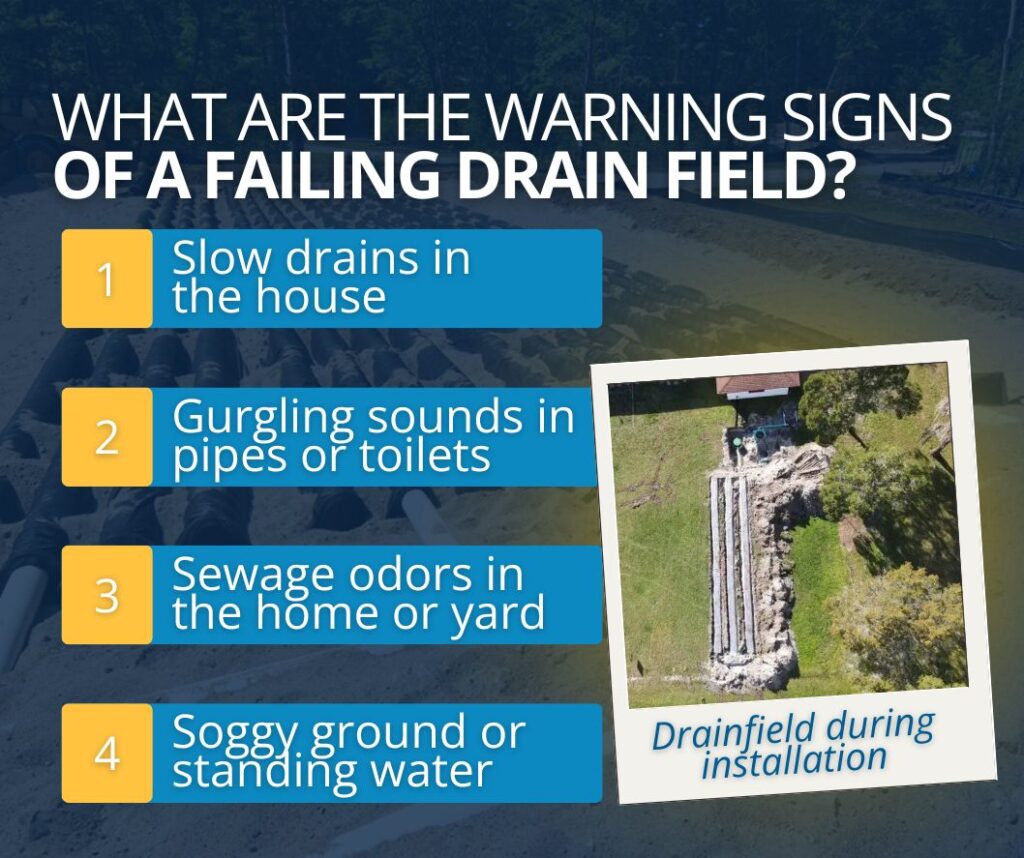
- Watch for warning signs. Slow drains across multiple fixtures, gurgling pipes, sewage odors outdoors, or soggy yard patches near the system all mean something needs attention.
Related Questions to Explore
- Can a homeowner install a septic system in Florida? No. Florida requires a licensed Septic Tank Contractor for installation. Homeowners can handle basic upkeep, but installation, modification, and significant repairs must be done by a licensed professional with a county health department permit. Contact our team if you are unsure what falls under licensed work.
- How often does a septic system need to be pumped in Florida? Every 3 to 5 years for most households. Larger families fill tanks faster. Your contractor can set a schedule based on your system size and usage.
- What happens if you don't maintain your septic system in Florida? The tank fills, solids overflow into the drainfield, and the field fails, often permanently. Sewage surfacing in the yard is a public health violation and can trigger county health department enforcement action. Fines for non-compliant systems are significant. Early maintenance costs far less than a field replacement.
- Do septic systems need to be inspected when buying a home in Florida? Yes, and it is strongly recommended. A pre-purchase inspection assesses the system's condition, capacity, and compliance and surfaces issues that a standard home inspection will not catch. Many Central Florida buyers make their offer contingent on a passing result. Our real estate septic inspection service covers what is needed for a property transaction.
- Are there new Florida laws about septic systems? Yes. Florida has tightened rules around systems near water bodies and springs in response to nutrient pollution concerns. Some counties now require a sewer connection when it becomes available within a set distance. ATU requirements have expanded in water-protection zones. Requirements vary by county, so confirm current rules with your local health department or a licensed contractor.
When to Call a Professional
Contact a licensed contractor when:
- Sewage odors appear inside or outside your home.
- Multiple drains are slow or backing up at once.
- You see standing water or unusually green, spongy grass near the drainfield.
- The system has not been pumped in more than five years.
- You are buying or selling a property with a septic system.
- New construction or an addition will affect the system or drainfield area.
Our team covers Polk, Hillsborough, Hardee, and surrounding counties with same-day emergency service and free estimates on all new work.
Conclusion
Florida's septic systems face environmental conditions that make proper design, permitting, and maintenance more critical than in most other states. All installations require a licensed contractor; most work requires a permit, and the state's rules are more protective than federal minimums.
Key takeaways:
- Florida's water table, sandy soil, and rainfall affect every septic system in the state.
- Licensed contractors and county permits are required for installation and significant repairs.
- Routine pumping is the most cost-effective protection for your drainfield.
Have questions about your system or need service in Central Florida? Our team at Septic Services of Central Florida offers honest answers and transparent pricing with no hidden fees.


