A septic system inspection checks your tank, drain field, baffles, distribution box, and system capacity to confirm everything is working safely and within code. If you are buying or selling a home in Central Florida, this evaluation is one of the most important steps in the transaction. At Septic Services of Central Florida, our licensed technicians have completed hundreds of these inspections across Polk, Hardee, and Hillsborough Counties. Here is a plain-language breakdown of what we look at, how to prepare, and what happens next.
What Is a Septic System Inspection?
A septic system inspection is a formal evaluation of every component in your onsite wastewater system. It is not the same as a routine pumping visit. The goal is to confirm the system is functioning properly, meets current Florida Department of Health regulations, and has adequate capacity for the property.
Inspections come up most often during real estate transactions, but homeowners also request them before major home additions or when a system is showing early warning signs.
Per the EPA's SepticSmart program, routine inspections every one to three years are one of the four core maintenance steps that keep a septic system out of failure.
What Does a Septic Inspector Check?
A thorough inspection covers five components. Here is what each one involves.
The Septic Tank
The inspector locates and uncovers the tank, checks the water level, and inspects the tank walls and lid for cracks, corrosion, and signs of groundwater intrusion. They also assess whether scum and sludge layers have built up to a point where pumping is needed before the inspection can continue. A visual check from above the lid is not a full inspection.
The Drain Field
The inspector looks for standing water or saturated ground above the drain field lines, which can signal failure or overload. They also evaluate how well the soil is absorbing effluent. Central Florida's high water table and rainy season (June through September) can accelerate drain field problems, so local knowledge matters here.
Inlet and Outlet Baffles
Baffles are the internal components at the tank's inlet and outlet pipes that keep solids from flowing out prematurely. The inspector checks whether both are intact and positioned correctly. Missing or deteriorated baffles are among the most common issues found during Florida inspections.
Distribution Box
In systems with multiple drain field lines, a distribution box routes effluent evenly. The inspector checks for cracks, shifts, or uneven flow that would overload one section of the field while leaving others underused.
System Capacity
The inspector evaluates whether the system is sized appropriately for the home. A tank that was sufficient for a two-bedroom house may fall short after a bedroom addition or bathroom renovation. If home size and system capacity do not match, it gets flagged in the report.
For real estate transactions, our team at Septic Services of Central Florida cross-references permit records against the current property configuration to catch cases where previous owners made additions without updating septic permits. See the full scope of our real estate septic inspections, including our 24-hour written report turnaround.
What Happens After the Inspection?
You receive a written report documenting the condition of each component, including photos and any recommended repairs or next steps. The report will classify the system as passing, marginal, or failing.
If issues are found, buyers and sellers can use the report to negotiate repair costs or price concessions. Lenders on FHA and VA loans typically require that identified issues be resolved before closing. One important distinction: a passing inspection confirms the system is functional and compliant at the time of inspection. It is not a guarantee the system is problem-free indefinitely.
How to Prepare for a Septic Inspection When Selling a Home
A few steps before the inspection can help things go smoothly.
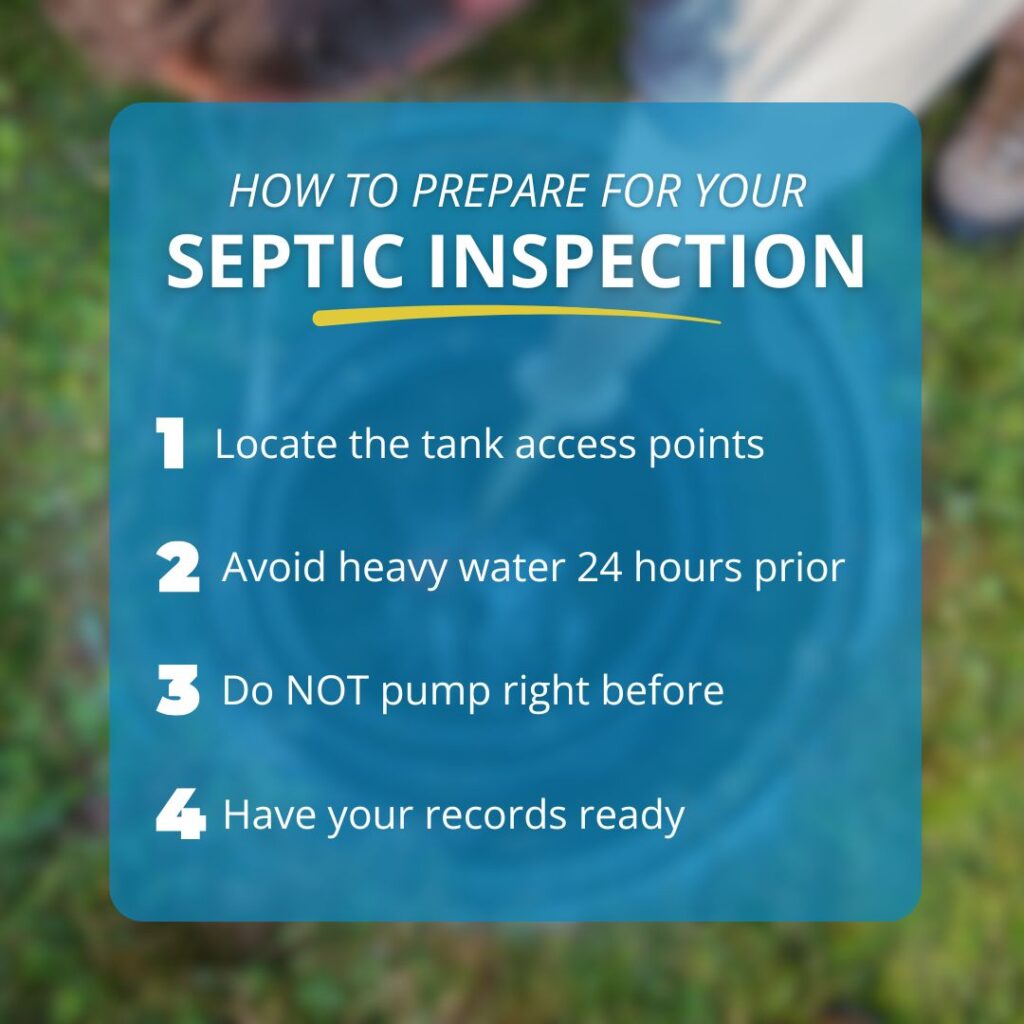
- Locate the tank access points. Share the lid location with your inspector before they arrive.
- Avoid heavy water use for 24 hours beforehand. Multiple laundry loads or back-to-back showers before the inspection can saturate the drain field and skew the results.
- Do not pump the tank right before the inspection. An empty tank makes it impossible to assess scum and sludge levels and can mask baffle or tank condition problems. Coordinate timing with your inspector if pumping is also needed. Our septic tank pumping service team can help you sequence both visits correctly.
- Have your records ready. Prior pumping logs, inspection reports, or permit paperwork give the inspector useful context.
Related Questions to Explore
- How long does a septic inspection take? A thorough residential inspection runs two to three hours. Inspectors who finish in under an hour are likely not uncovering the tank or checking every component. For complex systems or ATUs, plan for longer.
- Do I need to pump my tank before an inspection? No. A full tank gives the inspector important data on sludge and scum levels. If the tank is too full to evaluate safely, your inspector will recommend pumping on the spot. Our septic tank pumping service can handle that same day.
- What happens if my septic system fails inspection? A failed inspection does not kill the deal automatically. Buyers and sellers can negotiate who covers repairs or adjust the sale price. FHA and VA loans typically require the issue be resolved before closing. Our team provides repair estimates and handles drainfield repairs and replacements if needed.
- How often should a septic system be inspected? The EPA recommends inspections every one to three years and pumping every three to five years for conventional systems. Homes with ATUs require annual inspections by a certified inspector. Our Advanced Treatment Unit maintenance service covers those requirements.
- Is a septic inspection required to sell a home in Florida? No statewide law requires it, but most lenders, including FHA and VA, do. Many buyers also request one as a purchase contingency. Our real estate septic inspections include a written report within 24 hours to keep your closing on schedule.
When to Call a Professional
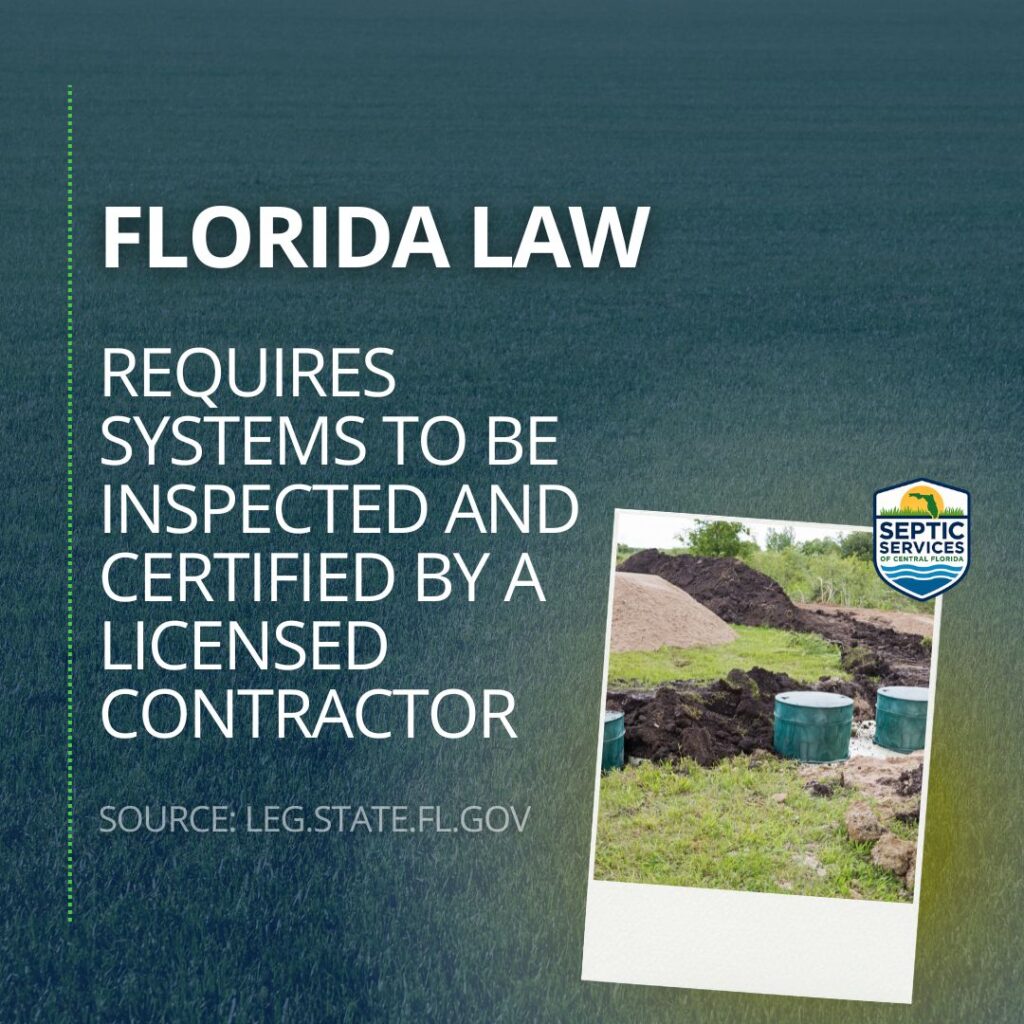
A septic inspection is not a DIY task. Florida law requires systems to be inspected and certified by a licensed contractor. That certification is what satisfies lender requirements and health department standards. An unlicensed inspector's report will not hold up.
Beyond licensure, local experience matters. Our team knows Central Florida's soil conditions, high water table, and rainy season effects in ways a general home inspector typically does not. Septic Services of Central Florida serves Polk, Hardee, and Hillsborough Counties and delivers written reports within 24 hours. Contact us to schedule your inspection or get a free estimate.
Conclusion
A septic system inspection covers five areas: tank condition, drain field performance, baffles, distribution box, and system capacity, all documented in a written report.
- Inspections are not the same as pumping visits: every component must be physically evaluated
- Sellers should avoid pumping the tank right before the inspection and limit water use for 24 hours beforehand
- Most Florida lenders require a passing report before closing, especially on FHA and VA loans
Ready to schedule? The team at Septic Services of Central Florida is available for inspections across Central Florida with same-day scheduling and fast written reports.


