
An aerobic treatment unit (ATU) is a septic system upgrade that pumps air into wastewater. That extra oxygen helps aerobic bacteria break waste down faster and more completely than a standard septic tank's bacteria can. Many Central Florida properties with poor soil, a high water table, or a small lot need this extra treatment step to meet state permitting rules.
At Septic Services of Central Florida, our team has 35+ years of combined experience installing and servicing ATUs across Polk County. This guide covers what an ATU is, how it works, and when your property might need one.
What Is an Aerobic Treatment Unit?
An aerobic treatment unit is a small-scale wastewater treatment system that adds oxygen to sewage so aerobic bacteria can digest it faster than the bacteria found in a conventional septic tank. It works much like a scaled-down municipal treatment plant, sitting right on your property.
Instead of relying only on gravity and natural settling, an ATU uses a mechanical air pump to keep the wastewater oxygen-rich. That oxygen speeds up bacterial digestion and produces a cleaner, clearer effluent before it ever reaches the drainfield. The EPA's septic systems overview describes ATUs as using many of the same processes as municipal sewage plants, just on a smaller scale.
Because the treated water is so much cleaner, an ATU can support a smaller drainfield than a conventional septic system needs, which is a major reason they show up so often on Central Florida lots.
How Does an Aerobic Treatment Unit Work?
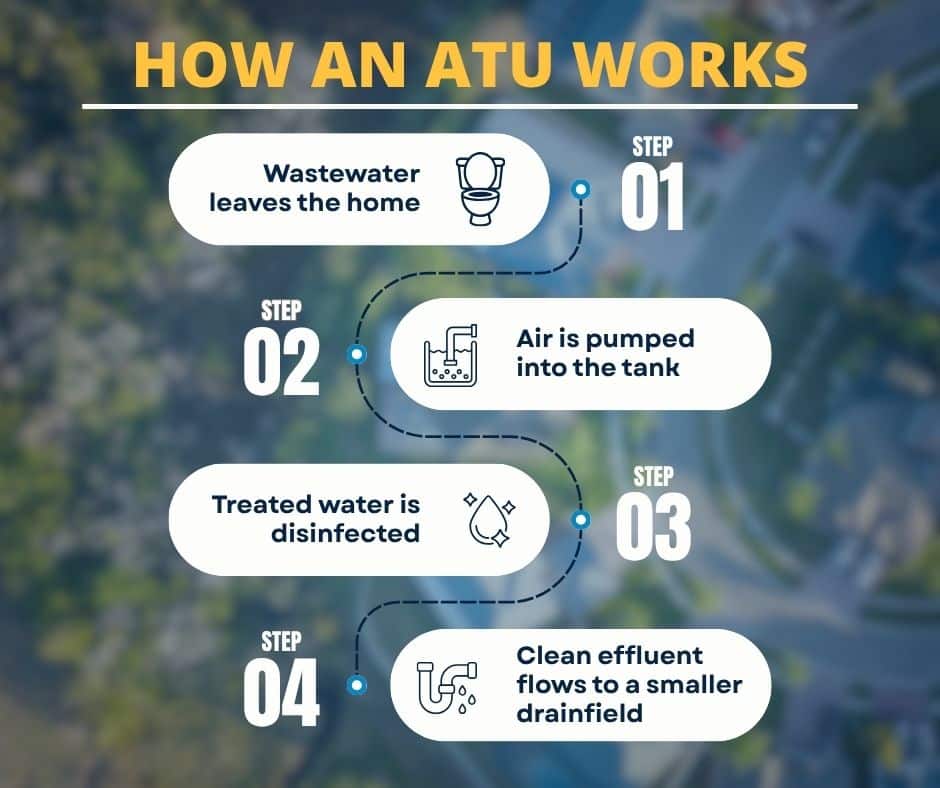
An ATU treats wastewater in stages inside one tank, moving it through pretreatment, aeration, and clarification before it's released to the drainfield.
Pretreatment (Trash Tank)
Wastewater first enters a trash tank, where heavy solids settle and lighter materials like oils float to the top. This step protects the aeration chamber from getting clogged with solids it isn't designed to handle.
Aeration Chamber
Next, the liquid effluent moves into the aeration chamber. Here, an air pump forces oxygen into the tank, creating the oxygen-rich environment aerobic bacteria need to break down organic waste quickly. This is the heart of the whole system, and it's also the part that needs the most ongoing maintenance because it relies on mechanical parts.
Clarifier and Disinfection
After aeration, the effluent flows into a clarifier, a calm chamber where any remaining solids settle out and get returned to the aeration chamber for more treatment. Many systems then add a disinfection step, using chlorine or UV light, before releasing the treated water to the drainfield or, in some cases, a spray irrigation system.
Aerobic Treatment Unit vs. Conventional Septic System
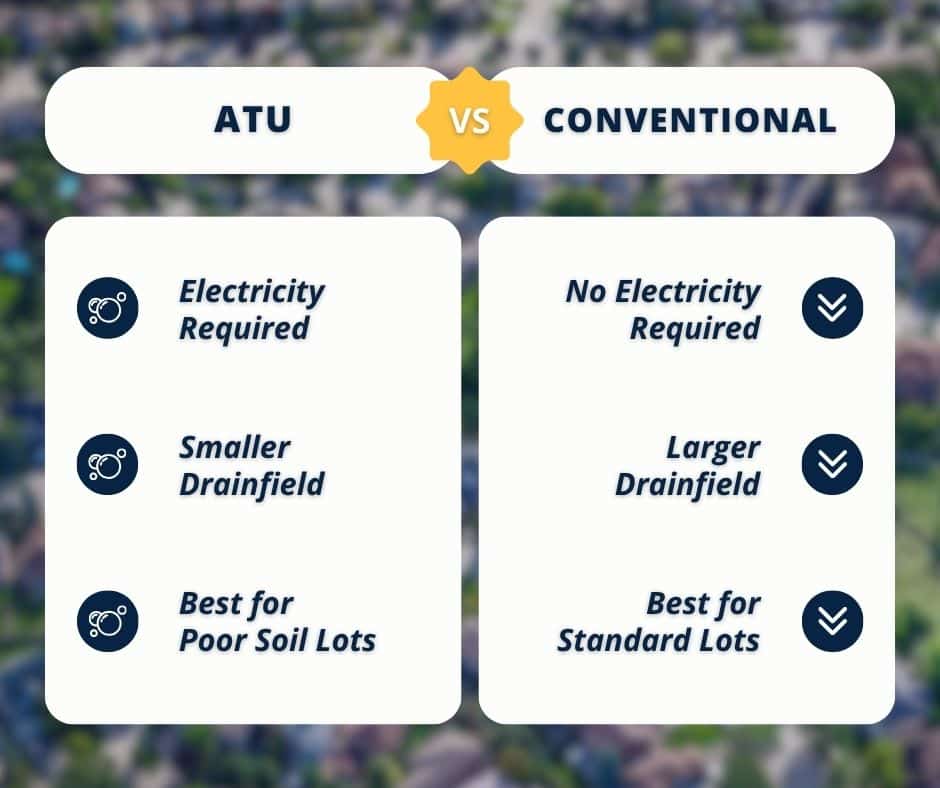
The biggest difference between an ATU and a conventional septic system is that an ATU actively adds oxygen to speed up treatment, while a conventional system relies only on passive settling and anaerobic bacteria.
| Feature | Aerobic Treatment Unit | Conventional Septic System |
|---|---|---|
| Treatment process | Active, oxygen-based | Passive, gravity-based |
| Drainfield size needed | Smaller | Larger |
| Electricity required | Yes | No |
| Maintenance | More frequent, mechanical parts | Less frequent |
| Best for | Poor soil, high water table, small lots | Standard soil and lot conditions |
Neither system is automatically the "better" choice. A conventional system is simpler and cheaper to maintain when the soil and lot size cooperate. An ATU earns its higher upkeep on properties where a conventional system wouldn't pass permitting at all.
Benefits of an Aerobic Treatment Unit
An ATU gives Florida homeowners options that a conventional system can't, especially on difficult lots.
- Works on poor soil or high water tables. ATUs are often the only permittable option where soil conditions or groundwater levels rule out a conventional drainfield.
- Needs a smaller drainfield. Because the effluent is cleaner, the soil absorption area can be smaller, which helps on tight lots.
- Protects nearby water bodies. Cleaner effluent means less risk of nutrient contamination near lakes, canals, or wetlands, a real consideration across Polk County.
- Supports spray irrigation in some setups. Properly treated and disinfected effluent can sometimes be used for surface irrigation, depending on your permit.
ATU Maintenance and Permitting in Florida
An ATU needs more hands-on maintenance than a conventional septic system because it depends on mechanical parts and a valid state permit.
Florida requires an operating permit for every ATU, and that permit has to be renewed on a regular schedule, similar to the biennial renewal cycle described by Florida's Department of Health. Most systems also require a signed maintenance agreement with a licensed provider as a condition of that permit.
On the mechanical side, a few things need regular attention:
- Air pump and diffusers should be checked monthly for airflow and wear.
- Professional inspections are typically scheduled every six months, per guidance from Oklahoma State University Extension and similar state programs.
- Sludge removal should follow the manufacturer's recommended pump-out schedule.
- Alarm systems need to stay functional. Most units have a warning light and buzzer that trip when the compressor fails or water levels run high.
If you're buying or selling a property with an ATU, a real estate septic inspection should confirm the permit is current and the maintenance contract is active, since a lapsed contract can hold up closing.
Related Questions to Explore
How much does an aerobic treatment unit cost?
Cost depends on your soil conditions, lot size, and which permit requirements apply to your property. Because pricing varies so much by site, the most accurate number comes from a free on-site quote rather than a general estimate.
Do aerobic treatment units need electricity?
Yes. The air pump that keeps the aeration chamber oxygenated runs on electricity, which means the system stops treating wastewater properly during a power outage. Backup power is worth discussing if your area loses power often.
Why is my ATU alarm going off?
An ATU alarm usually means the air compressor has failed or the water level inside the tank is too high. Don't try to silence it and wait; call a septic professional right away, since ignoring the alarm can lead to backups or system damage.
How often does an ATU need to be pumped?
Most ATUs need sludge pumped out on a schedule set by the manufacturer, often similar to a conventional tank's pumping interval. Your maintenance provider can confirm the right frequency based on household size and tank usage.
Can I install an ATU myself?
No. ATU installation requires state permitting, precise tank sizing, and licensed electrical work for the air pump. A licensed septic installer handles the site evaluation, permitting, and installation as one package.
When to Call a Professional
Call a professional any time your ATU alarm activates, you notice standing water or odors near the tank, or your maintenance contract is close to expiring. These systems rely on mechanical parts and a valid state permit, so small problems can turn into compliance or health issues quickly if they sit unaddressed.
Septic Services of Central Florida installs, maintains, and repairs ATUs throughout Polk County, and our team can also confirm whether your property's permit and maintenance agreement are current. If something seems off with your system, it's easier and cheaper to catch it early.
Conclusion
An aerobic treatment unit gives Florida properties with poor soil, high water tables, or tight lots a permittable path to a working septic system, at the cost of more maintenance than a conventional tank. Key points to remember:
- ATUs actively treat wastewater with oxygen, producing cleaner effluent and allowing a smaller drainfield.
- Florida requires an operating permit and a maintenance contract, both of which need regular renewal.
- Alarms, air pumps, and disinfection components all need routine attention to keep the system compliant and working.
If you need an ATU installed, serviced, or inspected, reach out to our Advanced Treatment Unit team for a free quote.


